
| Jan 29, 2026
The First SOF Truth and Security Technology: Why Surveillance Camera Effectiveness Depends on Human Factors
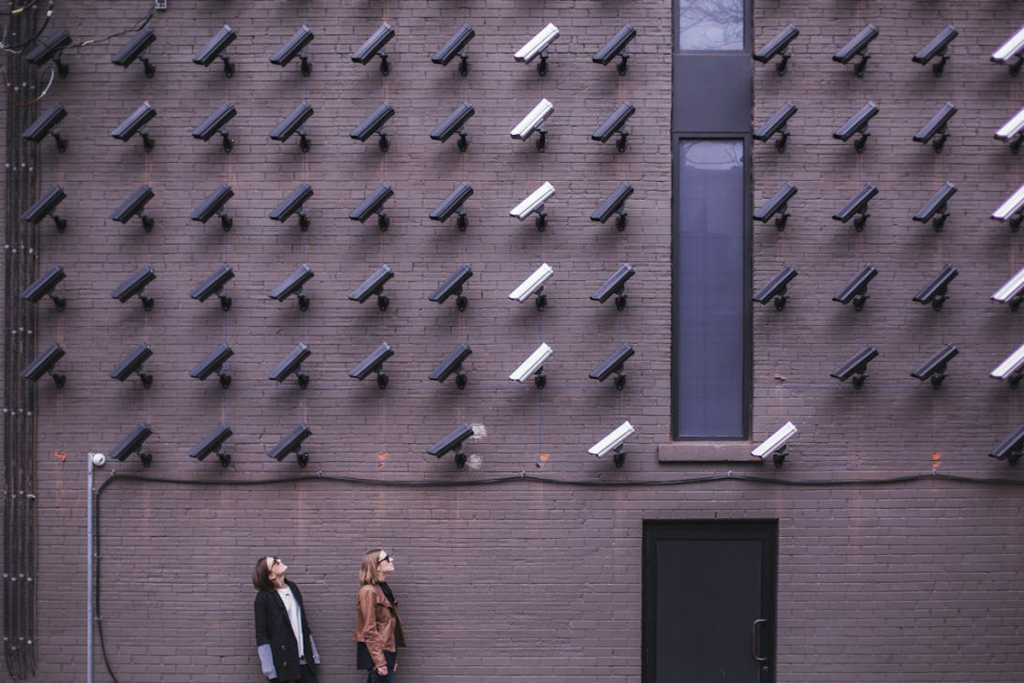
Humans are More Important Than Hardware in Private Security
“Humans are more important than hardware: People – not equipment – make the critical difference.” That is the first of five SOF Truths (SOF = Special Operations Forces). These truths serve as basic guidance for every member of the SOF community, functioning as a philosophical frame for day-to-day as well as long-term decision-making. There are simply no such universal guiding concepts in private security. And without these guides, it is easy for the philosophical contours of a private firm’s decisions, and indeed the individual decisions of those within the firm, to manifest like interpretations of the Rorschach test. Decades of research on organizational behavior demonstrate that when companies lack explicit values, implicit personal assumptions automatically drive decision-making.
Yet the vast majority of security companies do not have explicit (espoused) values. This, in my opinion, is the core of an issue that can dramatically affect consumers of security services and products. As the scholar Charles Nemeth, who wrote a book literally titled Private Security, explains: “On the employer front, companies play a critical role in setting out professional and ethical expectations” for their employees to follow. This single line, nestled at the beginning of a massive textbook, encapsulates the crux of a problem that starts at a firm’s principles, and ends either as a debit on a client’s balance sheet or, in extreme cases, tragedy.
But enough with the diatribe on the nexus of organizational culture and private security. Let’s overlay a value – transparency – onto what is likely the most ubiquitous capital security expense organizations make: security cameras.
The Data on Security Camera Effectiveness
If organizations have even a modicum of security awareness, they have cameras. These tools are an excellent piece of technology to leverage. Cameras, especially those with advanced analytics, can serve as crime deterrents, enhance and expedite real-time security responses, and support post-hoc investigations. But the devil is in the details, as they say. The data on the effectiveness of security cameras to accomplish those three goals is clear – they rarely satisfy all three in any one particular geographic setting, and the effectiveness of cameras is highly contingent on context and implementation.
In a recent paper by Piza et al. (2019) titled CCTV Surveillance for Crime Prevention. A 40-Year Systematic Review With Meta-Analysis, surveillance cameras were shown to have a statistically significant, yet modest effect on crime prevention. However, there was significant variation in effectiveness by geographic setting. Here is what the meta-analysis shows:
| Setting | Crime Reduction |
| Car Parks | 37 Percent |
| Residential Areas | 12 Percent |
| City/Town Centers | 6 Percent |
| Housing Complexes | 3 Percent |
| Public Transportation | 27 Percent |
Obviously, there is a major difference between 6 percent crime reduction in city centers and 37 percent crime reduction in car parks – but why? According to the authors, the difference in CCTV effectiveness between car parks, at the top end of crime deterrence effectiveness, and city centers at the lower end, revolves around the type of crimes that occur in those settings. Car parks represent high-opportunity environments where crime is rational, opportunistic, and indeed deterrable. In city centers, which are complex, crowded, multi-use spaces, security cameras may be less effective due to the more spontaneous nature of crime. Housing complexes showed similarly modest effects (approximately 3%). The takeaway is this: security cameras work best in settings where opportunistic, rational crimes occur (vehicle theft, property crime, etc.). However, cameras have little to no effect on violent crimes and other spontaneous offenses. But geographic setting is only part of the equation; how cameras are monitored and integrated into an organization’s broader security program is equally as important.
According to the same Piza et al. study, there is no detectable effect on crime deterrence when cameras are passively monitored (approximately 1 percent). When security camera monitoring is active, the average amount of crime deterred climbs to roughly 15 percent. When security cameras are actively monitored and combined with interventions such as lighting, police patrols, security guards, etc., the average effect on crime deterrence jumps to 34 percent. Now, this is all great information to know, but it is still incredibly abstract and, as some wise person once said: There are “lies, damned lies and statistics.” It is understanding how security camera effectiveness depends on geographic setting, monitoring, and integration that truly matters for organizations.
Contextual Knowledge, Organizational Values, and Security-Related Decisions
Understanding the contextual data on how cameras affect security enables organizations to be informed consumers of security technology and services. If you understand this data, you know enough to ask the right questions. Knowledge is power, and it can help you select a security firm whose products or services align with your strategic plan and whose values align with your own. Security consulting companies should know when and how to use surveillance cameras, and they should provide clients with meaningful recommendations – even if those recommendations do not equate to profit on their balance sheet. That is the value of transparency in private security. Organizations deserve honest recommendations calibrated to their specific context – recommendations that maximize effectiveness rather than maximize sales.
Finally, I am compelled to reiterate that people are more important than hardware. This SOF-derived principle applies as much to private security as it does to my time in Special Forces. Just as the effects of security cameras cannot be applied evenly across settings and applications, technology cannot singlehandedly guide a security program to strategic coherence – that responsibility rests firmly on the backs of the men and women entrusted to make context-appropriate decisions. And when those decision-makers work for firms whose values are implicit and whose actions are guided by personal assumptions, they can have a heck of a time objectively arbitrating client recommendations in ways that are holistically beneficial. The inkblot interpretation of “I think we need cameras” can vary widely depending on the philosophical frame with which one views the question, and private firms play a leading role in setting professional and ethical expectations for the interpreters.